Ancient Peoples
Mogollon, Hohokam and the other Southwests
Guidebooks flatten the ancient Southwest into one pueblo-shaped story. In reality at least four traditions shared the region, and two of them, the Mogollon and the Hohokam, built worlds as impressive as any cliff palace.
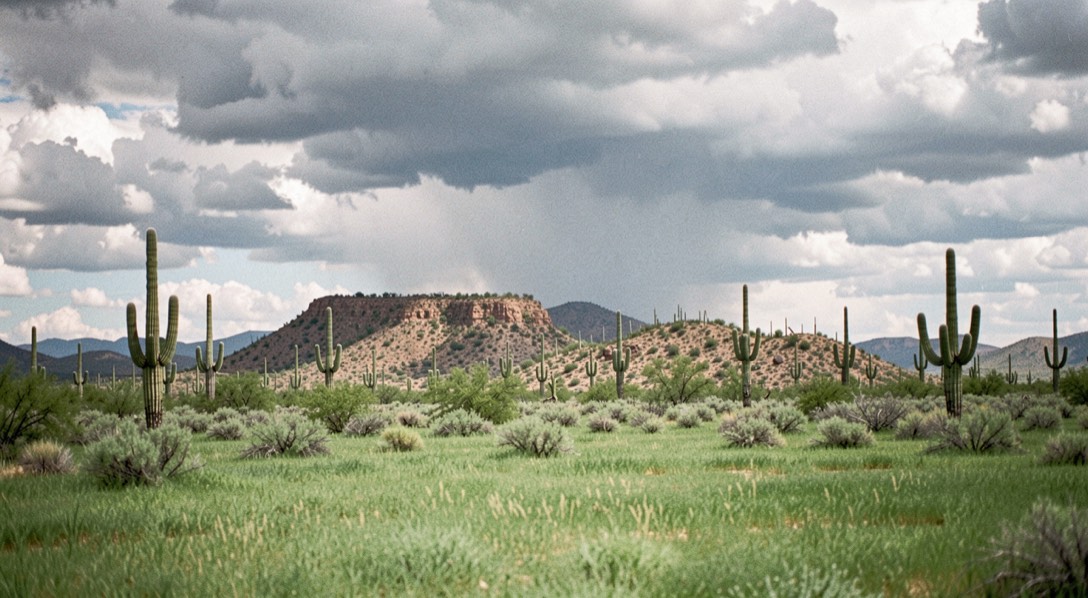
Draw a line from Flagstaff to El Paso and another from the Grand Canyon to the Mexican border, and you have sketched a region that no single culture ever controlled. The Southwest was a mosaic: Pueblo farmers on the Colorado Plateau, Mogollon villagers in the mountainous south and west, Hohokam irrigators in the Salt and Gila basins, and Patayan communities along the lower Colorado. A traveler who plans only around cliff dwellings is reading one chapter of a four author book, and the two other main authors left sites that rival anything on the Plateau.
Four traditions, one shared desert
The classic scheme gives each tradition a homeland, a ceramic signature and a set of ambitions. The table is the honest summary archaeologists still broadly accept, with dates rounded as always.
| Tradition | Homeland | Rough span | Hallmarks | Places to see today |
|---|---|---|---|---|
| Ancestral Puebloan | Four Corners plateau country | about 500 BCE to 1300 CE in the heartland, later beyond | masonry villages, kivas, black-on-white pottery, great houses and roads | Chaco Canyon, Mesa Verde, Hovenweep |
| Mogollon | mountains of eastern Arizona, western New Mexico and northern Mexico | about 1000 BCE to 1400 CE | pithouse villages, early red-on-brown pottery, Mimbres painted bowls | Gila Cliff Dwellings, Mimbres valley sites |
| Hohokam | Sonoran Desert along the Salt and Gila rivers | about 300 CE to 1450 CE | hundreds of miles of canals, ballcourts, platform mounds, buff pottery | Casa Grande Ruins, Pueblo Grande museum site |
| Patayan | lower Colorado river valley | about 700 CE to contact era | river floodplain farming, intaglios and trail shrines, little surviving architecture | river corridors and desert trail networks |
The traditions traded, fought, borrowed and collided. Hohokam shell reached the Plateau, Puebloan pottery ideas reached the mountains, and the borders between all of them were porous in ways that make the modern visitor's neat map a fiction.
Mogollon: pithouses, kivas and the first painted pots
The Mogollon tradition takes its name from the mountains of the same name and ran on a highland rhythm of pithouse villages, hunting and gardens. Its greatest gift to the world is pictorial: in the Mimbres branch of southwestern New Mexico, potters between about 1000 and 1130 CE painted bowls with figures, animals, insects and scenes so confident that they remain among the most admired ceramics ever made anywhere. Mimbres Classic black-on-white is instantly recognizable, and it is also fragile heritage: the fashion for collecting those bowls a century ago emptied burials and scattered collections, a cautionary tale told further in our guide to seeing artifacts lawfully. Later Mogollon people built masonry villages in cliff alcoves, and the site most travelers meet, Gila Cliff Dwellings, is a Mogollon rather than a Puebloan creation, a distinction the site's own signage now makes clearly.
Hohokam: the canal empire of the Sonoran Desert
The Hohokam did something no Pueblo polity attempted: they reengineered a river system. Canal networks in the Salt and Gila basins eventually ran for hundreds of miles, watering fields of corn, beans, squash and cotton in desert that would otherwise support only wild harvesters. Those canals underlie today's Phoenix canal system, which follows many of the same alignments. Hohokam communities also built ballcourts, several hundred of them between about 750 and 1000 CE, echoing Mesoamerican forms, then shifted to platform mounds in later centuries. Their buff-colored pottery, often painted in red, traded far outward. Casa Grande Ruins National Monument protects the most famous standing building, a four story caliche structure of the 1300s under a modern roof, and it pairs naturally with the museum site at Pueblo Grande in Phoenix, where a canal still runs past excavated houses.
A checklist before visiting Mogollon or Hohokam country
- Decide which tradition the site belongs to before you go, and adjust expectations about masonry and kivas.
- Carry extra water in Sonoran Desert sites; shade is scarce and canals no longer cool the trail.
- At Mimbres related sites, expect displays about burial contexts and treat them with corresponding gravity.
- Remember the monsoon: summer afternoons in the highlands bring lightning that cliff alcoves do not shelter from.
- Check tribal and federal access rules first; many Hohokam and Patayan places sit on tribal land with their own permits.
Mistakes to avoid with the other Southwests
The recurring errors are comparative. Do not call Mogollon sites "little Mesa Verdes," a phrase that mistakes a different tradition for a failed copy of another. Do not assume the Hohokam vanished when their ballcourt and canal systems reorganized after 1450; O'odham communities of the region descend from the desert's ancient farmers, and the continuity is a matter of record and of living testimony. Do not project Puebloan institutions, kivas and clan structures, onto people who organized differently. And do not skip these sites because they lack cliff dwellings; a canal alignment and a Mimbres bowl carry as much human ambition as any alcove village, and our ruin comparison guide will help you route them together. The Pecos periods, likewise, apply cleanly only to Pueblo country, as the timeline guide warns.
The decision worth making
Plan one trip that deliberately crosses a tradition border, Gila Cliff Dwellings plus a Rio Grande pueblo, or Casa Grande plus Wupatki, and the Southwest stops being a single story with famous scenery and becomes the contested, inventive, four-voice conversation it was. The notebook's other strata lean Puebloan only because the evidence is richest there; the other Southwests are not footnotes. They are coauthors, and they sign their work in canals, clay and mountain stone.