Pottery & Artifacts
Where to see artifacts, lawfully displayed
The beautiful objects are mostly off the trail, behind glass and behind laws that finally reflect whose ancestors made them. Here is where to see Southwestern artifacts lawfully, and how to read the cases like a curator.
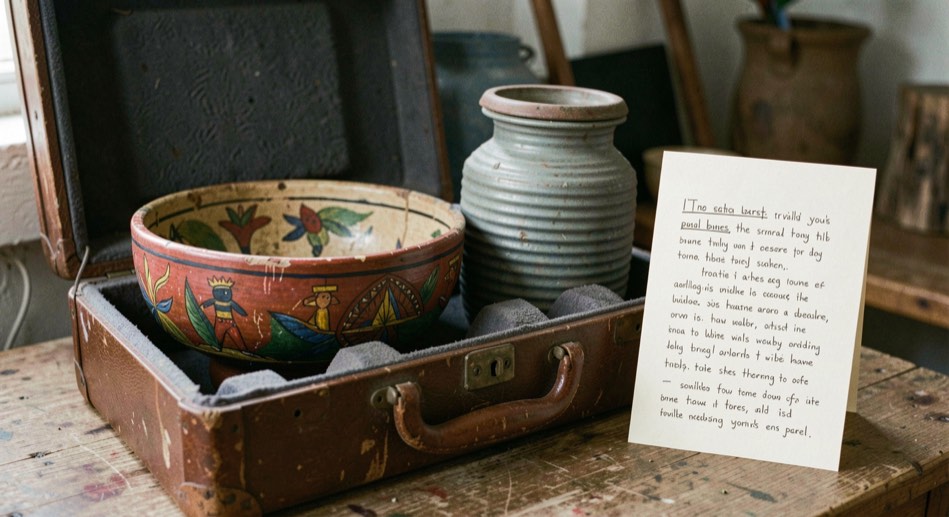
The finest Southwestern artifacts are not scattered on mantels, whatever the old postcards implied. They sit in tribal museums, park visitor centers and research collections, and the path they took to those cases is part of the story: a century of private collecting emptied thousands of sites, and a series of federal laws, chronicled in our antiquities laws guide, shut the doors behind the loss. Visiting the lawful collections is therefore not a consolation prize. It is the only place where a Mimbres bowl, a feathered staff or a painted jar still has its paperwork, its context and, increasingly, its community's voice on the label.
The lawful circuit, region by region
| Institution | Where | Collection strengths | Why it belongs on the route |
|---|---|---|---|
| Chaco Culture NHP visitor center museum | Chaco Canyon, NM | excavated great house material in its home canyon | the objects and the architecture in one horizon |
| Mesa Verde chapin mesa archaeological museum | Mesa Verde NP, CO | alcove site collections, pottery and tools by period | a century of the park's own research under one roof |
| Canyons of the Ancients visitor center and museum | near Dolores, CO | regional Ancestral Puebloan collections and research labs | the best single introduction to the Four Corners record |
| Indian Pueblo Cultural Center | Albuquerque, NM | history and living arts of the nineteen pueblos | Pueblo voices curating their own story |
| Museum of Indian Arts and Culture | Santa Fe, NM | broad Southwest archaeology and ethnographic collections | deep exhibits with contemporary Native interpretation |
| Edge of the Cedars State Park Museum | Blanding, UT | outstanding Four Corners collection, ancestral items retained | quiet, serious and near Cedar Mesa country |
Two habits make any of these visits better. Go to the tribal institutions with the same seriousness as the federal ones, because the Indian Pueblo Cultural Center and the tribal museums at places like Zuni and Acoma present collections their communities chose to share, with interpretation the outside museums are still catching up to. And pair each museum with the landscape it came from, the way the ruin comparison guide pairs sites: a Chaco morning and a Chaco case in one day reorganize both.
How repatriation changed the display floor
Federal law now shapes what you see. The Native American Graves Protection and Repatriation Act of 1990 requires museums and agencies receiving federal funds to inventory Native American human remains and cultural items and repatriate them to lineal descendants and tribes on request. The consequences are visible in every serious gallery: burial goods have left public display across the country, sensitive items sit in accessible storage or with their communities, and labels now say who lent, who owns and who objects. Some cases that filled guidebooks a generation ago are deliberately empty, and the emptiness is the exhibit. A visitor who understands this reads the room correctly: what remains on view is there with consent or under clear law, and some things you are not shown are not lost but returned.
A checklist for visiting collections well
- Read one provenance label per gallery, the where and when of the object, and trace it to the site you plan to visit.
- Ask the front desk what is newly repatriated or newly reinterpreted; the answers are usually the best part of the visit.
- Spend equal time in the contemporary gallery, where living potters answer the ancient cases directly.
- Buy from the museum shop that shares revenue with tribal artists, and buy contemporary work only.
- Photograph only where permitted, and never post images of sensitive items the museum has flagged.
Mistakes to avoid with artifacts
Do not shop for "antique" Native artifacts, since the legal antiquities trade is essentially closed, and a tourist with an old bowl bought roadside can end the trip explaining it to agents, a trap the law guide details. Do not treat museums as neutral attics; many collections arrived through exactly the collecting the laws ended, and the honest labels say so. Do not skip small institutions because the famous ones are famous; the Blanding and Dolores museums hold material the big city galleries cannot show at that depth. Do not photograph human remains exhibits even where technically allowed, and above all do not confuse "old" with "unowned": descendant communities never surrendered their interest in these objects, and the law now says what they always said.
The decision behind the glass
Plan one lawful collection per trip and treat it as the trip's thesis, the way this notebook treats the Pecos timeline as its spine. You will see better objects than any roadside stand ever offered, you will support the institutions holding the region's memory in trust, and you will leave with the right appetite: not to own a piece of the past, but to understand where it lives now, and who has the standing to decide.