Ancient Peoples
Where the Ancestral Puebloans went
The most durable myth in Southwest archaeology is that a whole people disappeared. The evidence says something quieter and more interesting: villages dissolved, people moved in known directions, and their descendants live where they said they would.
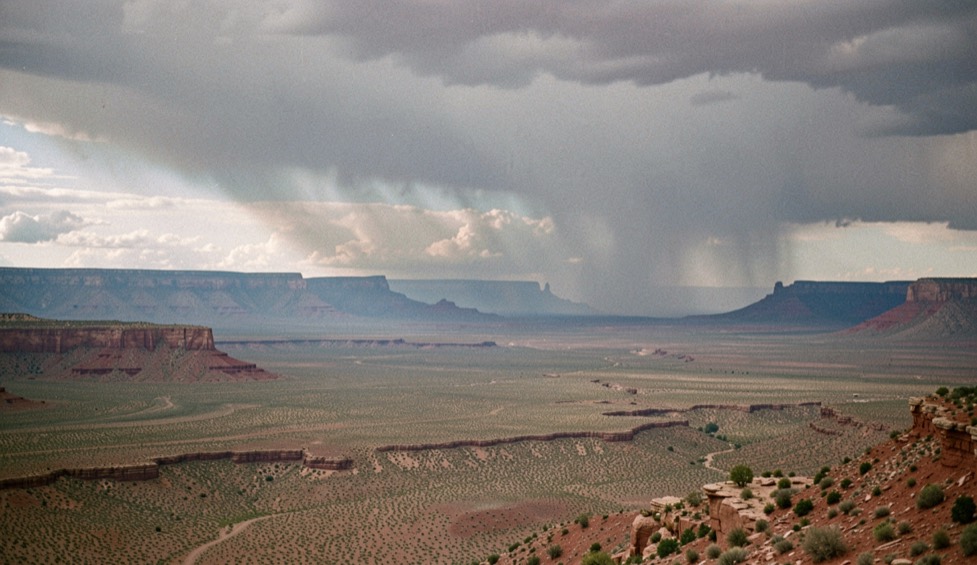
Stand at the Sun Temple or the Cliff Palace overlook and the question arrives on schedule: where did everybody go? The dwellings of Mesa Verde country emptied in the last quarter of the thirteenth century, the great houses of the San Juan basin a generation earlier, and for a popular audience that moment hardened into a story of mystery and disappearance. Archaeologists never adopted the mystery. Movement is the normal condition of Pueblo history, the region's own traditions insist on it, and the phrase "Ancestral Puebloan" exists precisely to name ancestors rather than a vanished race.
What the empty villages actually record
The departures are among the best dated events in ancient America. Tree ring records show a stretch of poor rains from 1276 to 1299, the so called Great Drought, arriving on top of decades of population growth, cooling summers and rising violence that skeletal and settlement evidence records unevenly but persistently. Before the final exodus, people had already been regrouping for a century, abandoning dispersed farmsteads for large planned villages, then leaving those too. The cliff dwellings were not overrun in a night; they were the last houses standing in a landscape that families were leaving in stages, taking beams, pots and the knowledge of where water lived.
What archaeology cannot do is put name tags on the movers. It can show direction, timing and continuity of material culture, and for the rest it does something better than guess: it listens to the descendant communities, whose own accounts describe migration as history rather than legend.
The descent lines: Hopi, Zuni and the Rio Grande
By 1300 the Four Corners heartland was nearly empty of Pueblo farmers, and the population map had redrawn itself around three poles. Each destination shows archaeological signatures of arrival, and each is a living community today, which is why the table names present nations rather than ruins.
| Destination | Archaeological evidence of arrival | Signature traits after 1300 |
|---|---|---|
| Hopi mesas and nearby villages, Arizona | clan traditions naming Four Corners places; shared pottery styles and kiva forms traceable to the north | Jeddito yellow ware, dense plaza villages, continuity of ceremony on three mesas |
| Zuni, Acoma and the Laguna country, New Mexico | population growth and new village plans in the late 1200s along the southern routes | aggregated towns at the edge of the plains, continued black-on-white painting before glaze wares |
| Northern Rio Grande valley, New Mexico | an explosion of new settlements and quartered plaza pueblos after 1300 | Pueblo IV towns such as Pecos and Tyuonyi, glaze paint pottery, katsina ceremony in its historic form |
The movements were probably chained and incremental, family by family over decades, with stops at places like the Gallina highlands, the Pajarito Plateau and the middle Little Colorado. Some groups folded into existing towns; others founded new ones. Heterogeneity is the rule, and that is expected when the subject is people rather than pottery types.
Reading oral tradition and archaeology together
Hopi, Zuni, Acoma and Rio Grande communities hold detailed migration accounts that describe clans arriving from distant northern places, sometimes naming landforms archaeologists can visit. Tribal scholars have led the argument that these histories are evidence, testable in their own terms and entitled to the same seriousness as a ceramic seriation. Where the accounts and the excavations agree, as they often do in broad outline, the convergence strengthens both. Where they differ, the notebook's practice is simple: report the archaeology, cite the community's own account as what it is, and never use one to overrule the other in a field where the other is not ours to score. Respecting that boundary is part of the etiquette every visitor owes, set out fully in our site visit checklist.
Mistakes to avoid when retelling the story
The failed retellings share a family resemblance. Do not say the Ancestral Puebloans "mysteriously vanished," a phrasing that erases Hopi, Zuni and the Rio Grande pueblos out of simple narrative laziness. Do not blame the drought alone, as if climate were a hand on a chessboard; people adapted to dry spells for centuries and the move happened through politics, violence and opportunity as much as rainfall. Do not reverse the evidence by claiming the cliff dwellings were built as refuges in a panic; many were built and enlarged during the same decades people were leaving the region, which is a different and more human story. And do not treat "Anasazi" as a neutral synonym; the word is a Navajo term, sometimes glossed as ancient ones and sometimes read as enemies of the ancestors, and many Pueblo people reject it. "Ancestral Puebloan" costs two more syllables and breaks nothing.
The decision this history asks of you
Adopt the migration reading and every ruin visit changes register. Mesa Verde stops being a ghost town and becomes a departure lounge, Chaco a staging ground for centuries of movement, and the pueblos you can respectfully visit today, with the rules in our guide to the Pecos timeline in your pocket, the obvious last chapters of the same book. Plan one visit to an ancestral place and one to a living pueblo's public, tribally run museum or visitor enterprise, and you will meet both ends of the migration, which is the only way to see it whole.