Learning Resources
Learning archaeology without a shovel
The Southwest runs on trained volunteers. Site stewards walk sites and report damage, avocational programs teach method in the evening, and research centers take amateurs into the field legally. Here is how to join.
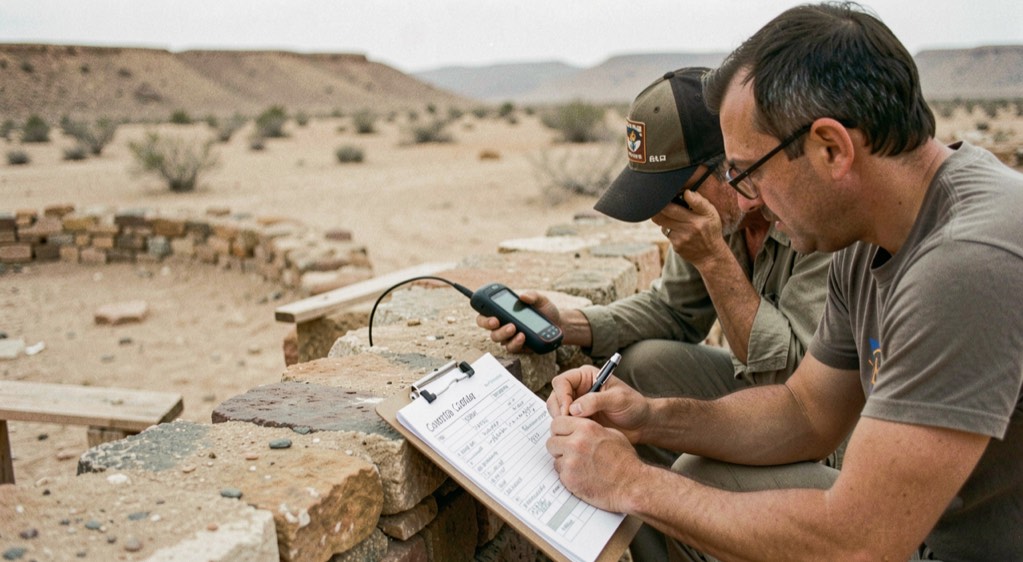
There is a version of loving Southwest archaeology that involves a shovel and a jeep, and it is called a felony. The real version, the one agencies actively recruit for, looks like a clipboard, a condition form and a quarterly walk across a site you have come to know better than anyone. Trained volunteers monitor thousands of sites in Arizona and New Mexico, museums run on them, and research centers teach adults in the field every summer. This guide maps the honest doors into the discipline, none of which require you to dig illegally or buy anything, and all of which make you useful, which is the entry fee.
Site stewardship: the front line
The core programs pair volunteers with specific sites to visit on a schedule, photograph conditions and report damage, erosion and vandalism. Arizona's Site Steward Program, coordinated through the state historic preservation office with federal, state and tribal partners, trains stewards to document rather than touch, and assigns them sites by region and ability. New Mexico's SiteWatch runs on the same logic under its historic preservation division. The training is real: recognizing ADTs, the all terrain vehicles of the night digging world, photographing in sequence, testifying accurately. Stewards are often the only recurring human presence a remote site has, which is why a quarter of the region's case files begin with a steward's report. The observation craft involved is the same one taught in our sherd guide, formalized.
Learning the method legally
Colorado runs the most formal avocational track, the Program for Avocational Archaeological Certification, which teaches survey, excavation skills, lab work and law through evening classes and supervised field sessions. The Archaeological Conservancy, a national nonprofit based in Albuquerque, preserves sites outright and welcomes members onto tours and preserves, a way to see sites while literally paying for their safety. Crow Canyon Archaeological Center near Cortez teaches the public inside real research: week long programs where amateurs excavate and wash pottery under archaeologists, contributing to the very Pueblo II and III questions our Pecos guide frames. The federal Passport in Time program places volunteers on forest service surveys and excavations. Every one of these exists because agencies cannot staff the Southwest alone; the amateur is infrastructure here, not a tourist with a trowel.
| Program | Who runs it | What you actually do | Commitment |
|---|---|---|---|
| Arizona Site Steward Program | state SHPO with agency partners | training, then assigned site monitoring and reports | a training weekend, then scheduled visits |
| SiteWatch New Mexico | state historic preservation division | site monitoring across agency and tribal partnerships | training plus seasonal rounds |
| Program for Avocational Archaeological Certification | History Colorado and the archaeological community | evening courses and supervised field and lab credits | months to years, at your pace |
| Crow Canyon Archaeological Center | independent research and education nonprofit | week long excavations and lab programs for adults and families | a week, or a season |
| The Archaeological Conservancy | national preservation nonprofit | membership, preserves and guided site tours | as little as an afternoon |
| Passport in Time | US Forest Service | volunteer slots on surveys, excavations and lab work | a project at a time |
A checklist for choosing your door
- Start with monitoring if you can walk and wait; it is the scarcest skill and the cheapest to train.
- Choose the lab if knees outrank curiosity; pottery washing is where typologies come from, per our pottery guide.
- Take a structured course before any field school so the site makes sense when you reach it.
- Ask any program for its permits and partners in writing; legitimate ones answer proudly.
- Budget for the real costs, memberships, travel and gear, and treat them as dues to a discipline.
Mistakes to avoid on the way in
Do not confuse a commercial "dig vacation" on private land with training; some are fine, and the test is whether credentialed archaeologists direct the work and the finds stay out of pockets. Do not monitor sites you are not assigned; unregistered visits with cameras read exactly like scouting, and stewards have jurisdiction only on paper and in teams. Do not post steward locations, site assignments or condition photos on social media, a rule every program enforces for the reason our law guide explains. Do not skip the legal module because it sounds dull; it is the module that keeps volunteers employed by agencies rather than interrogated by them. And do not think certification makes you a professional; it makes you a serious amateur, a role the Southwest invented and depends on, which is better.
The decision worth a weekend
Pick one program within a day's drive, take its next training, and let the region turn you from a reader into a keeper. The books from our reading list will argue on your shelf; a site you walk four times a year will argue with your feet, and you will finish each visit the way this notebook's every guide ends: with the place intact, better understood, and someone new informed.