Rock Art & Petroglyphs
Where to see rock art in the Southwest
Public rock art is easy to visit badly and wonderful to visit well. These six destinations cover every major tradition and technique, and each has rules that are really part of the art.
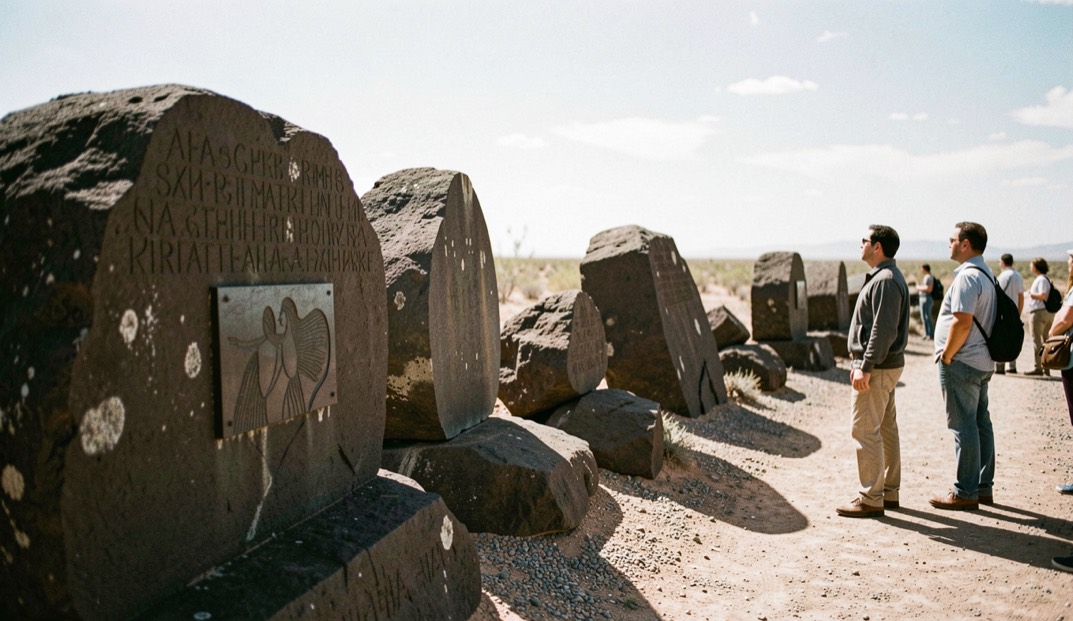
Rock art is the most accessible archaeology in the Southwest: no ticket lottery, no ranger gate, just a wall of images that has been waiting for you. Accessibility is also its vulnerability, so the destinations that protect their panels do it with rules that shape the visit. The six sites below were chosen for range, our guide to technique and the one to interpretation supply the reading method, and together they form a fair tour of the region's traditions.
The six destinations, compared
| Site | Tradition and age | Scale | Access and rules |
|---|---|---|---|
| Petroglyph National Monument, Albuquerque NM | Ancestral Puebloan and later Rio Grande eras | thousands of images along a volcanic escarpment | city edge park, self guided canyons, no pets on trails |
| Newspaper Rock, Indian Creek, UT | Archaic through Ancestral Puebloan and later | one dense famous panel of hundreds of figures | state heritage site roadside, viewing barrier, keep to it |
| Three Rivers Petroglyph Site, NM | Jornada Mogollon | over twenty thousand images on a ridge trail | Bureau of Land Management site, half mile trail, camping nearby |
| V-Bar-V Heritage Site, Verde Valley AZ | Southern Sinagua | large panel of over a thousand symbols | forest service site, seasonal hours, interpreters on site |
| Hueco Tanks State Park and Historic Site, TX | Masks and pictographs, Archaic onward | rock basins and celebrated mask imagery | parts guided only, day permits and quotas for North Mountain |
| Nine Mile Canyon, UT | Fremont and Ute eras | dozens of panels along a forty mile road | mixed private land, stay on road, zero tolerance for off walking |
What each site is best for
Petroglyph National Monument is the primer, an hour from an airport gate, with the added lesson that West Mesa's escarpment is sacred ground to nearby pueblos, which is why some trails are closed and why bicycles do not belong on them. Newspaper Rock is the masterpiece in miniature; its barrier exists because the panel sits at ground level, so the etiquette is to read it with your feet planted. Three Rivers is the deep field day: a ridge of boulders so densely worked that you will see workshops, superposition and repatination within a single square, the raw material of our technique primer. V-Bar-V gives the cleanest guided reading in the region, including the solar marker demonstration that makes the calendrical argument concrete. Hueco Tanks is the pictograph capital, where masks of striking design shelter in alcoves, and its permit system is the model of how managers balance art and graffiti. Nine Mile Canyon is the road trip, forty miles of panels past ranches, where staying on the graded road is both law and manners on private ground.
Plan the light before the site. Shallow pecking that vanishes at noon glows under a low winter sun, and several parks schedule interpreter walks around those hours; V-Bar-V's solar demonstration, for one, only works near the equinoxes. Summer is the wrong season for open boulder fields in the southern deserts, whatever the calendar says, and winter storms close the high roads of the canyon country without warning. A rock art weekend is really a light and weather calculation, and the tables above are the itinerary's least important numbers.
A checklist for any rock art day
- Check land status before you go: park, forest, state, tribal or private changes every rule that follows.
- Carry the site's own brochure and read the panel captions after your eyes, not before.
- Photograph in raking light, morning or evening, without touching, wetting or chalking anything.
- Keep groups small and voices low; some of these places are chapels, and one of them is somebody's ancestor's signature.
- Report new damage to the managing agency with location and photos, and never post exact coordinates of fragile panels.
Mistakes to avoid at rock art destinations
Do not assume every image near a trail is public domain; at places like the monument in Albuquerque and the canyon at Chinle, panels carry living ceremonial meaning and some are off limits entirely, duties our law guide spells out. Do not climb onto panels for angles; feet grind varnish and loosen faces, and the best compositions are usually from the viewing point the managers chose. Do not touch to feel the pecking, a request rangers make a hundred times a week. Do not build cairns, rearrange fallen stones or add anything, ever. And do not schedule Hueco Tanks casually, because its permit quotas are real and the guided areas are the only way to the best masks, a rule that surprises visitors who arrived expecting a state park and found a reserve.
The decision for your route
Choose one site per tradition rather than six panels of the same style: the monument for Rio Grande proximity, Three Rivers for the Mogollon south, V-Bar-V for Sinagua, Nine Mile for Fremont, Hueco Tanks for pictographs, Newspaper Rock for the classic Plateau panel. Add the etiquette of our visit checklist and one book from the reading list for the drive, and a week of rock art will teach you more of the ancient Southwest than any museum wing, because here the art is still in the place that made it.